I've been asking myself the wrong question my whole life.
I kept asking: why am I unhappy? Like if I could just find the right answer, the right relationship, the right accomplishment, the right combination of being enough... the unhappiness would lift. Like it was a puzzle and I was just missing a piece.
But that's not the right question. The right question is: how could I possibly be anything else when I have never, not once, been allowed to just exist?
Let me explain what I mean by that. And I'm going to get into some neuroscience here, because understanding the science of what happened to me is part of how I process it. Bear with me. I promise it connects.
I was not wanted.
That's the foundation. That's where everything starts. I was born to teenagers who told me, to my face, that I ruined their lives. And when you're a kid and your parents say that (not in a moment of frustration, but as a repeated, reinforced truth), your brain doesn't file that under their problem. Your brain files it under fact about me. You are a burden. You take up space that was meant for other people. Your existence requires justification.
So you learn to justify it. You become useful.
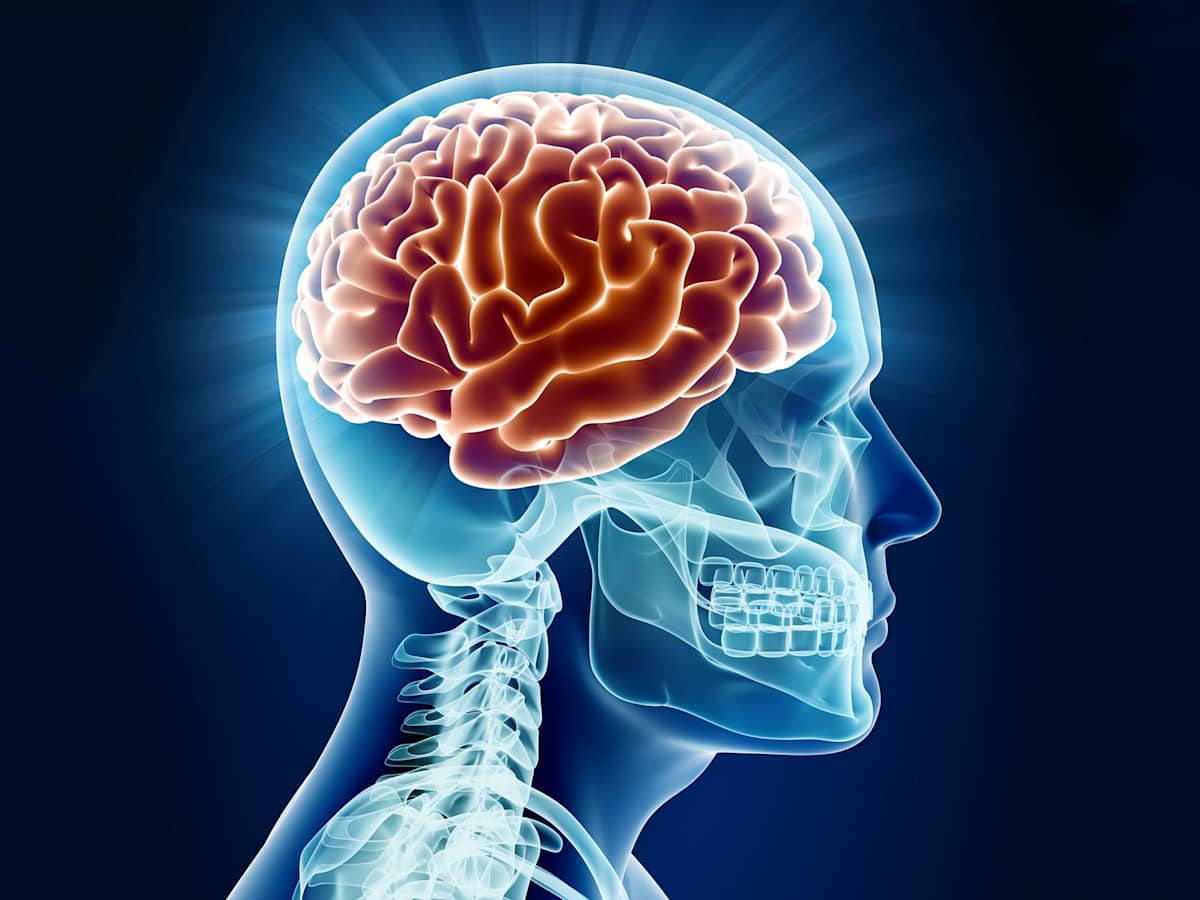
Here's what's happening in your brain when that lesson takes root early. Your nervous system is building itself during those first few years. The neural pathways that govern attachment, emotional regulation, self-worth... they're being wired in real time based on what your environment teaches you. When the environment teaches you are safe and loved regardless of what you do, the brain builds a foundation of secure attachment. The vagus nerve learns to regulate. The stress response calibrates to actual threats.
When the environment teaches you are a problem that must earn its place, the brain builds something very different. Your HPA axis (your stress system) gets stuck in overdrive. Cortisol floods your system chronically instead of in appropriate bursts. Your amygdala, the brain's threat detector, becomes hypervigilant. It starts scanning every interaction for signs of rejection, abandonment, withdrawal of love. Not because you're paranoid. Because you were right. The threat was real. Your brain learned the correct lesson for the environment it was in.
The problem is that your brain doesn't update the software when the environment changes. You carry that wiring into every relationship, every room, and every moment of your adult life. You're running a survival program that was written by a toddler's experience of being told she shouldn't exist.
I've been running that program for nearly thirty years.
The performance.
Here's what the program looks like in practice. I walk into every relationship, every friendship, every professional connection, every community, with an unconscious mandate: be so useful that they can't throw you away. Be the helper. Be the organizer. Be the one who shows up. Be funny, be talented, be generous, be resilient. Produce enough value that your presence is justified.
And it works. For a while. People love the performance. They really do. I'm good at it. I've built communities, published books, written songs, shown up for people in ways that genuinely mattered. None of that was fake. The love behind it was real.
But the engine driving it? That's where it gets complicated.
Because when your deepest motivation for showing up is if I stop being useful, I'll be abandoned, you're not building intimacy. You're building a transaction. And transactions have an expiration date. Eventually, you burn out or slip up or just get tired, and the people who were there for what you do (not who you are) start to drift. Or you realize they never really saw you at all. They saw the performance. They loved a version of you that was carefully designed to be loveable.
Neuroscience has a term for this cycle. It's called the fawn response. Most people know about fight, flight, and freeze. Fawn is the one that doesn't get talked about enough. It's when your nervous system learns that the safest response to a threat isn't to fight it off or run from it... it's to make yourself indispensable to it. To become so pleasing, so accommodating, so useful that the threat has no reason to hurt you.
Fawning becomes automatic. You do it without thinking. You read a room and instantly calibrate: what does this person need me to be? And you become that. Over and over. In every relationship. Until you've played so many roles that you genuinely don't know which one is you.
I don't know which one is me.
That's not something I say for dramatic effect. I mean it literally. If you stripped away every role I play for other people (the writer, the community builder, the helper, the strong one, the resilient one), I don't know what's underneath. I've never been alone long enough to find out. Because being alone, for me, isn't just uncomfortable. It's an identity void. If there's nobody to perform for, nobody to be useful to... then who am I? And do I even exist?
This is the pattern that has destroyed me more times than I can count. I find a person. I latch on. I pour myself into the relationship. I think, oh god, is this it? Did I finally find the thing? And then it collapses. Every time. They leave, or they turn out to be different than I thought, or I sabotage it before they get the chance to hurt me.
The sabotage is the part I'm only now starting to understand. My brain has learned, through decades of reinforcement, that love is temporary and conditional. So when something good starts to happen, my nervous system doesn't relax into it. The better things get, the more danger my brain perceives, because historically, the higher I climb, the further I fall.
There's research on this. People with early attachment disruption often experience what psychologists call fear of positive experience. It's not that you don't want good things. It's that good things trigger your threat detection system because your brain has linked them to inevitable loss. The dopamine hit of connection gets immediately followed by a cortisol spike of anticipated abandonment. Your body literally will not let you enjoy it.
So you do the only thing that feels safe. You pull the rug out yourself. Because if you're the one who destroys it, at least you saw it coming. At least you had control. The pain of self-sabotage is familiar pain. The pain of being blindsided by a person you trusted is the kind that puts you in a hospital.
I have been in that hospital. More than once.
So here's the trap, laid out as plainly as I can say it. I don't believe I have inherent worth. I believe my worth is manufactured through usefulness. So I pour myself into other people to earn my place. But because I'm pouring from an empty cup and performing a role instead of showing up as myself, the connections I build are based on the performance, not the person. When the performance cracks (and it always cracks, because I'm human and I get tired), the connection fails. Which confirms the original belief: I am not enough. I am only loved for what I provide.
Loop. Repeat. Forever.
My brain has been confirming this belief for my entire life. Not because it's true, but because the operating system filters for evidence that supports it and discards evidence that contradicts it. That's confirmation bias working at the neurological level. Your reticular activating system (the brain's filter for what's relevant) literally screens out information that challenges core beliefs established in early childhood. I could be surrounded by evidence that I'm loved and my brain would find the one data point that says otherwise and spotlight it.
I have been doing this. I can see it now. I've been so focused on the people who left, the people who betrayed me, the love that turned out to be conditional... that I may have missed moments where something real was being offered. Or worse, I may have destroyed those moments because they didn't match the operating system's predictions.
That's the part that makes me want to throw up.
Here's what I know. I know that I am scared all the time. Scared of being abandoned, scared of being alone, scared of being too much, scared of not being enough. Scared that if I stop performing, the whole structure of my life caves in. And honestly? Some of that fear is based in reality. I'm disabled. I'm financially dependent. I can't just blow up my life and start over in some eat-pray-love fantasy. The constraints are real.
I also know this: the only living beings on this planet who really love me are my animals. My dog. My cats. When I'm with them, the performance stops. I don't earn their love. I don't produce anything for them. We just exist together, and it's the closest thing to peace I've ever felt.
A therapist would ask: what makes that different? And I've thought about it. It's not that they can't leave. It's that the love is reciprocal without being transactional. I take care of them, yes. But they return it without keeping score. Nobody's calculating whether I've been useful enough today to deserve affection. We just make each other's lives better by being in the same room.
That's what I want with humans. That's what I've always wanted. And the sick irony is that I built an entire philosophy around it (Found Family, one of the pillars of my Radical Resilience work) without ever experiencing it myself. I've been writing the blueprint for the life I'm starving for and handing it to other people.
I stay alive because I promised I would. I promised myself and I promised my daughter. Not because of my books, not because of my brand, not because of what I produce. Because I love a little girl and I want her to know that her mama didn't quit.
That's the realest thing about me. And it took this long to see that it's also the most important clue. Because that love, the love I have for her, isn't performative. It's not based on usefulness. I would love her if she never did a single thing for me in her entire life. I would burn the world down just to make sure she knows she matters.
That kind of love exists in me. I have it. It's in there. I just have never turned it inward.
I don't have a neat resolution for this rant. I'm not going to tie it up with a bow and tell you I've figured it out, because I haven't. What I have is a hypothesis and the beginning of an awareness that scares the hell out of me.
The hypothesis is this: I'm not unhappy because something is wrong with me. I'm exhausted from a lifetime of earning the right to exist. And the path forward isn't to earn harder. It's to find the woman underneath the performance and figure out if she's worth knowing.
I don't know how to get there from here. I don't know how to rewire decades of survival programming while still living inside the constraints that make survival necessary. I don't know how to stop performing when the performance is the only thing keeping the lights on.
But I know she's in there. And for the first time in my life, I'm more curious about her than I am afraid of what I'll find.
That has to count for something, right?