Here's the unspoken rule of creative survival: Don't self-promote. Support others and hope they support you back.
I learned this the hard way. A few years ago, I was That Person. If I knew you, I was marketing at you. Links in DMs, asking for shares, treating friendships like networking opportunities. I didn't think I was being predatory. I thought I was hustling.
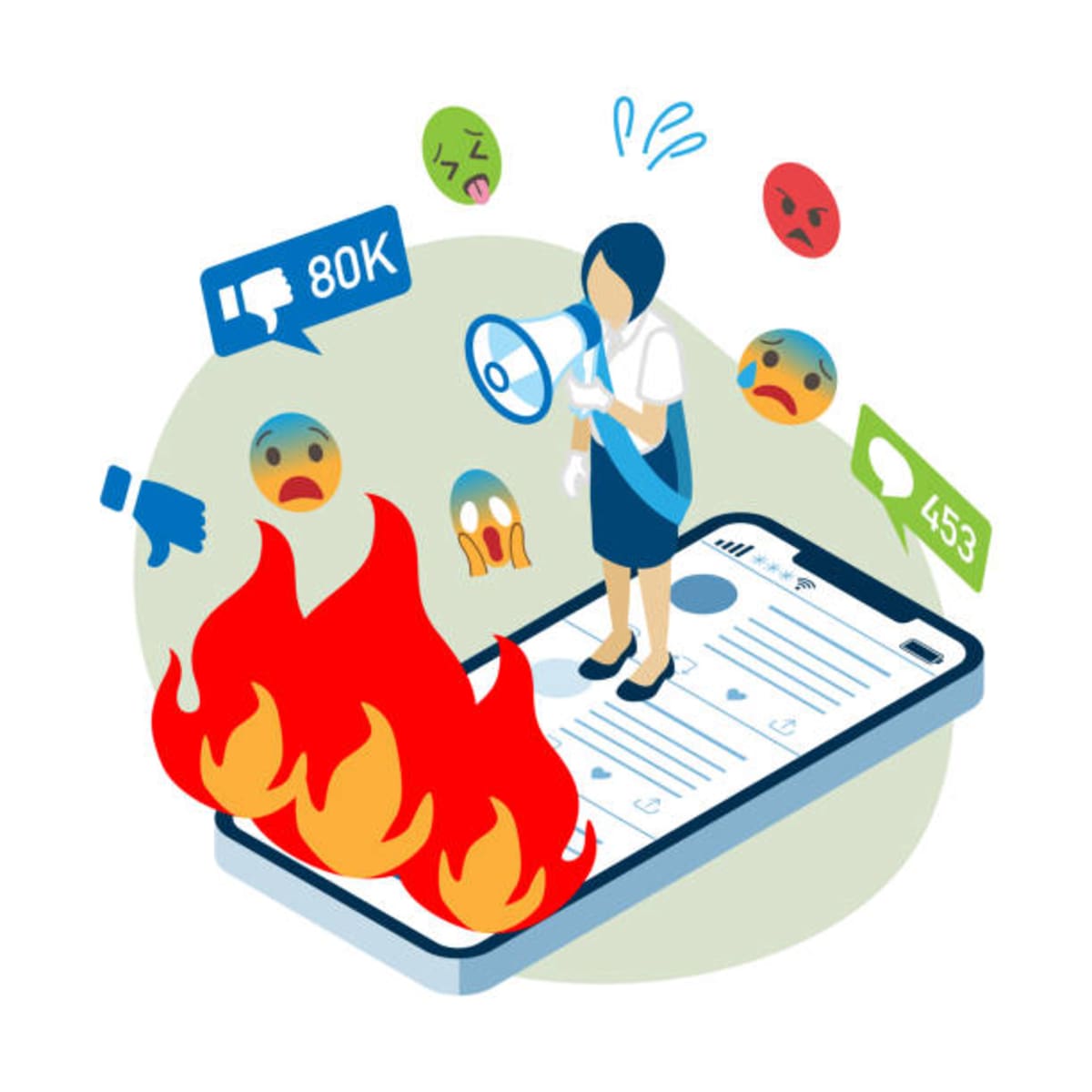
Then I got publicly called out, and it wasn't gentle. It sent me into a breakdown. I disappeared from social media for a long time.
Was the callout harsh? Absolutely. Did I also need to hear it? Yeah. I did.
So I've spent the last year trying to unlearn all of that. Practicing talking about my work only when it's genuinely welcome. Reading the room instead of just broadcasting. It's hard. I still mess up. But I'm trying.
The problem is... I did the work. I changed. And now I'm watching the same one-way dynamics play out in reverse. I support people who never support back. I give copies of my books to people who put them in desk drawers. I ask for small favors and get declined by people I've championed publicly for years.
And here's the real kicker: I'm currently blacklisted from posting in local Facebook groups. Not for rule violations. Just... quietly excluded. The admins decided they don't like me, probably for reasons rooted in mistakes I made years ago, and now I can't promote my own work in my own community.
So what do I do?
The research on this is pretty brutal, actually.
Studies from Carnegie Mellon and City University London found that self-promoters consistently overestimate how positively others will react to their self-promotion and underestimate how annoyed people actually get. We think we're sharing good news. They think we're bragging. The gap between those perceptions is massive, and social media makes it worse because there's no immediate feedback to correct for it. You post something about your accomplishment, you get some likes, you think it landed well. Meanwhile, half your audience silently unfollowed you.
Here's where it gets messier. Humans are wired for reciprocity. When we do something nice for someone, there's a deep, almost unconscious expectation that it will come back to us. Sociologist Alvin Gouldner called this the norm of reciprocity, and it's so fundamental that breaking it triggers actual distress. Research shows that failed reciprocity erodes trust, increases stress, and can even affect physical health. We like people who help us and dislike those who ask for help but never return it. That's not pettiness. That's how humans have functioned for thousands of years.
And when the reciprocity doesn't come? When you keep showing up for people who never show up for you?
Neuroscience research on social exclusion shows that being ignored or rejected activates the same brain regions as physical pain. The dorsal anterior cingulate cortex and the anterior insula (areas involved in processing physical hurt) light up when we're excluded from even something as trivial as a virtual ball-tossing game. Chronic exclusion depletes coping resources and leads to depression and helplessness. This isn't me being dramatic. It's measurable. Social pain is real pain.
So we have a perfect storm: Self-promotion triggers negative reactions. Relying on others to promote you requires reciprocity that may never come. Being excluded from community spaces causes actual neurological harm. And the algorithms running our social platforms? They're optimized for engagement, which means they reward outrage and punish anything that looks too much like marketing.
Research on Instagram users found that the unpredictability of algorithmic reward and punishment creates what one study called algorithmic precarity... a state of constant anxiety about whether your content will be seen, shared, or shadowbanned into oblivion. Creators describe feeling like they're trying to appease an inconsistent authority figure who changes the rules without warning.
Sound familiar?
I keep coming back to a question I asked myself recently: At what point in our lives are we responsible for realizing the only way to make this whole stupid society thing work is to uplift others AND ourselves? Not just one or the other.
Because the current model is broken. I can't self-promote. I'm supposed to support others and hope they support me back. But they don't. And I can't just keep giving without receiving anything in return, because that's not sustainable for anyone.
The research on rebuilding trust and social capital after reputation damage suggests that it takes consistent behavioral change over time. Not apologies. Not explanations. Actual, observable different behavior, sustained long enough that people start to believe the pattern has changed. One study found that the longer a positive relationship exists before a breach, the easier it is to recover trust afterward. When trust is broken early (before there's much relationship history to draw on), it's much harder to repair.
That tracks with my experience. People who knew me before my public callout have been willing to give me another chance. People who only know me from the callout or its aftermath? I'm starting from zero, or worse than zero.
Here's what I know from Radical Resilience: Growth isn't linear. Redemption isn't guaranteed. And sometimes you do all the right things and still don't get the outcome you want.
I don't have a tidy answer to this. I'm sitting in the tension right now, trying to figure out how to exist as a creative person who needs visibility to survive but can't self-promote without backlash and can't rely on others to do it for me.
Maybe the answer is to keep showing up anyway. Keep creating. Keep supporting people who deserve it (even if they never return it). Build a body of work so undeniable that eventually, maybe, the tide turns.
Or maybe the answer is to find different communities. New spaces where my past mistakes aren't tattooed on my forehead. Places where I can start fresh.
Or maybe there is no answer, and this is just what it feels like to be a creative person in a broken system that punishes authenticity and rewards outrage.
I genuinely don't know. I'm just trying to figure it out like everyone else.