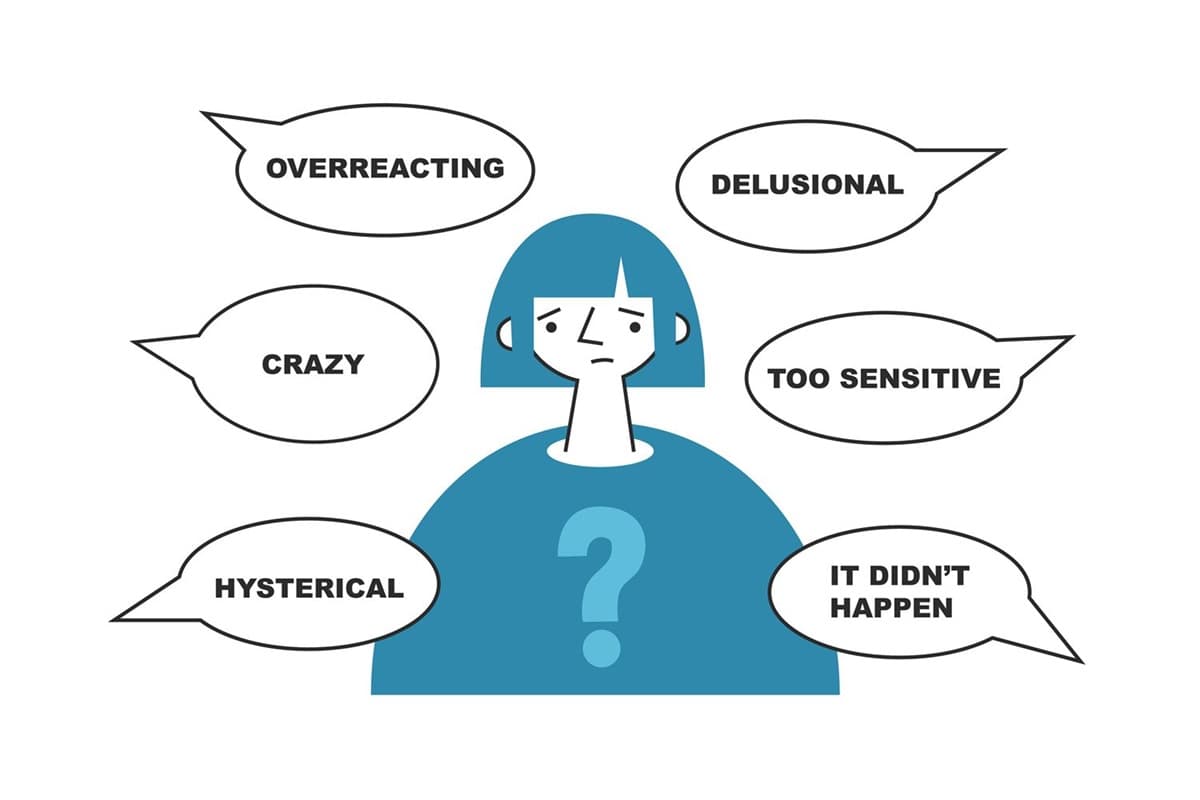
I've been thinking a lot lately about the moment when a relationship ends. Not the explosive kind, where there's a fight and a door slam and everyone knows exactly where they stand. I mean the quiet kind. The kind where you realize, somewhere in the fog of silence and non-responses, that you're the only one still holding on.
Recently, I had to set a boundary with someone I trusted. Someone I'd invited into my life in meaningful ways. Someone I'd shown up for, defended, worked with, and extended grace to when they needed it. The relationship had gone quiet without explanation, and after reaching out and getting nothing, I finally said: this isn't working for me, and here's why.
The response I got wasn't an apology. It wasn't even an explanation. It was a complete rewrite of history.
Suddenly, things I knew had happened hadn't happened. Things I'd said were twisted into things I hadn't meant. The silence I'd experienced? Apparently my fault for not communicating through the right channel. The work that wasn't done? Actually, I was the one who changed the plan. The whole thing got flipped so neatly that for a moment, I genuinely wondered if I was the asshole.
And here's the thing: maybe I was, a little. I'm not perfect. I know I have blind spots. I know I can be a lot. I'm still learning how to communicate, how to manage expectations, how to be a better friend and collaborator. I carry that awareness with me every single day.
But there's a difference between acknowledging your own growth edges and accepting a version of events that you know isn't true.
This isn't the first time this has happened to me. I've been on the receiving end of this pattern before: extend trust, get burned, try to address it, and suddenly become the villain in a story I don't recognize. It's exhausting. It makes you question your own memory, your own perception, your own sanity.
Gaslighting has become such an overused word that it's almost lost its meaning. Everyone accuses everyone else of it now. But at its core, gaslighting is simple: it's when you clearly communicate your experience and the other person responds by telling you your experience didn't happen. It's not a disagreement about interpretation. It's a denial of reality.
The tricky part is that sometimes, the other person genuinely remembers things differently. Memory is weird. Perspectives diverge. Two people can live through the same moment and walk away with completely different stories. That's not gaslighting. That's just being human.
So how do you tell the difference?
I've been sitting with this question, and here's where I've landed: I check myself first. I ask, genuinely, if I could be wrong. I look for evidence. I talk to people I trust who aren't invested in the outcome. I sit with the discomfort of maybe being the problem.
And if, after all of that, the other person's version still doesn't match reality? If the facts don't line up? If you have receipts and they're telling you the receipts don't exist?
That's when you trust yourself. That's when you close the door.
I'm not angry anymore. I'm not even sad, really. I'm just... done. I said what I needed to say. I documented my position. And I'm moving on.
But I keep coming back to this question, and I don't think I have a clean answer for it yet:
How do we know when we're being gaslit versus when we need to do some internal growth?
Maybe the answer is: both can be true at the same time. Maybe the work is learning to hold space for your own imperfection while still trusting your own reality. Maybe that's the whole damn point.